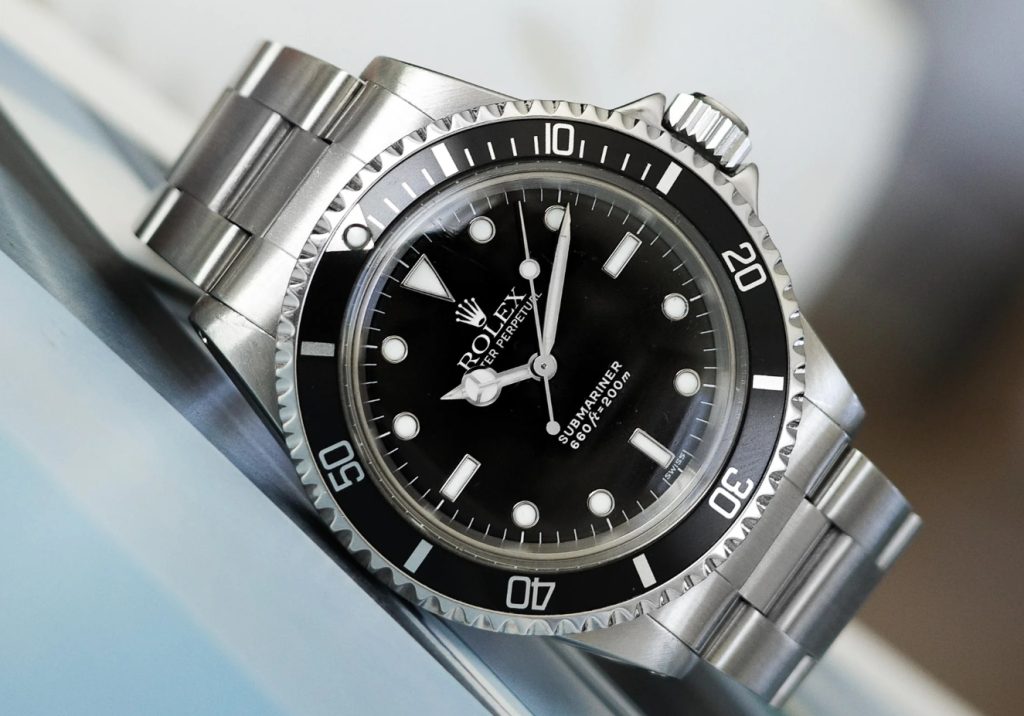
The Rolex Submariner reference 5513 occupies a distinctive place in the model’s history. Produced over a long period beginning in the early 1960s and ending in 1989, it is known for its no-date dial, rotating dive bezel and restrained tool-watch layout. Those features make it a useful reference for readers who want to understand how small design decisions shape the identity of a vintage Submariner.
For readers comparing Rolex replica watches in the UK, the 5513 is more than a familiar black-dial silhouette. Its appeal rests on the relationship between the dial, bezel, hands, case and bracelet. A watch can reproduce the broad outline yet still look wrong when the markers are too large, the hands have the wrong proportions or the bezel insert feels visually heavy.
Why the 5513 has a different character
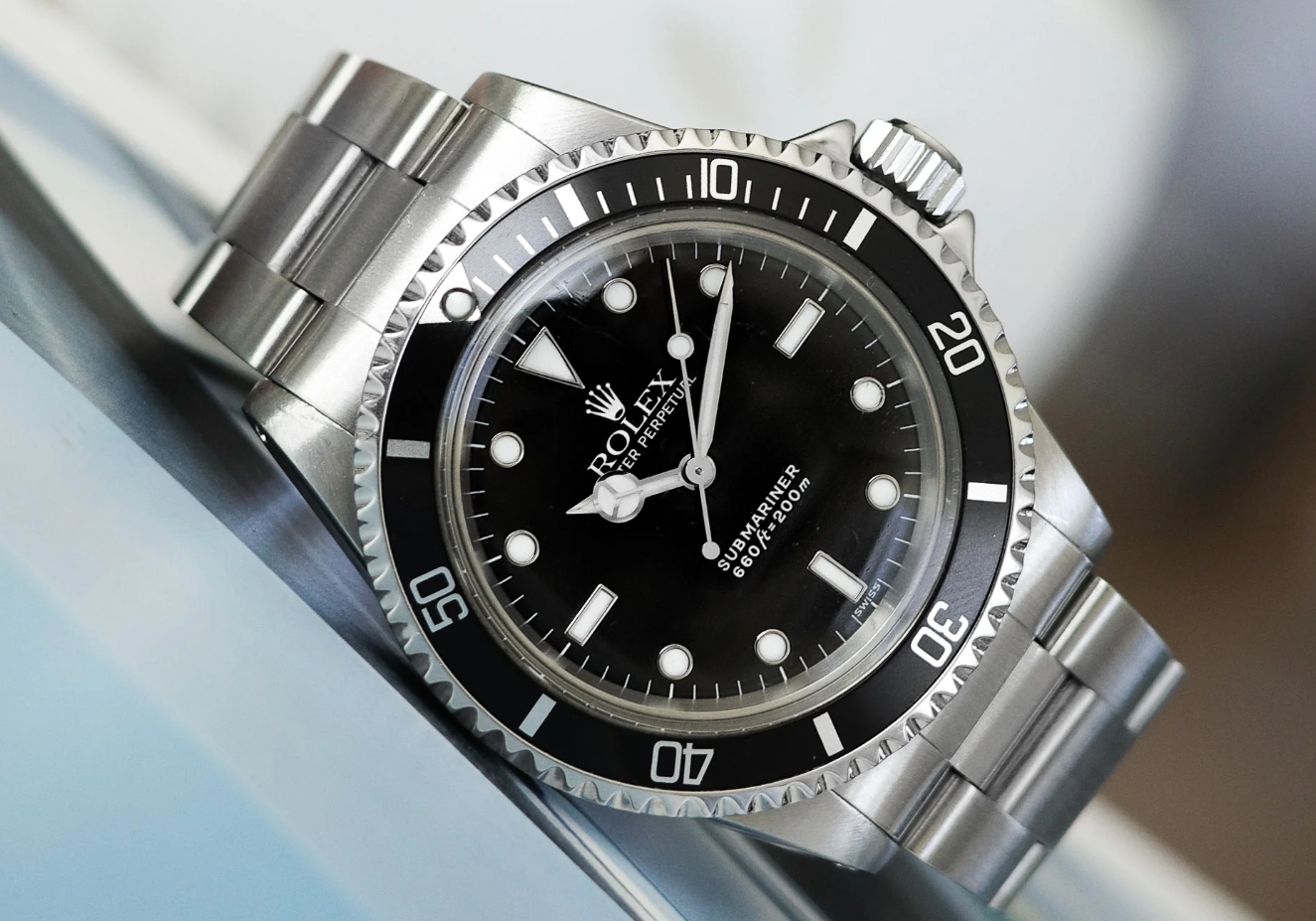
The most obvious distinction is the absence of a date window. Without a date aperture and magnifier at three o’clock, the dial has a more even visual balance. The hour markers and hands become especially important because there are fewer elements to distract the eye. On a vintage example, the shape of the plots, the colour of aged luminous material and the spacing of the dial text can all influence how the watch is perceived.
The reference also spans many years, so there is no single dial appearance that represents every 5513. Details changed over the production run, and condition, service history and replacement parts can make two genuine examples look noticeably different. When reading about a particular example, it is better to identify the dial and bezel details being discussed than to treat every 5513 as identical.
Details worth examining on a replica interpretation
Start with the overall proportions. The bezel should sit naturally against the case rather than appear too tall or too broad, while the lugs should give the watch a balanced outline. The minute track, hour markers and hands should look coherent when viewed together. If the hands dominate the dial or the markers sit too close to the edge, the watch can lose the quiet, utilitarian character associated with the reference.
Next, look at the bezel insert and its markings. The numerals and minute graduations need consistent alignment, and the triangle at twelve should sit directly above the dial marker. The black surface should not overwhelm the dial, and the transition between bezel, crystal and case should look deliberate rather than uneven. These are visual observations, not proof of the materials or water resistance used inside a particular watch.
The bracelet and clasp also matter. End links that fit poorly, uneven brushing or excessive play between links can change the impression of the whole watch. A careful comparison should distinguish visible finishing from claims about movement reliability, water resistance or long-term durability, which cannot be established from photographs alone.
Vintage character is not the same as condition
Collectors often associate older Submariners with faded bezels, warm lume and marks accumulated through use. Those signs can be attractive, but they are not a universal standard of quality. A naturally aged dial, a replacement part and an intentionally distressed finish are different things. Any description of a watch should be clear about what can actually be observed and avoid presenting artificial ageing as evidence of originality.
The same caution applies to movement claims. The historical reference and its original specification do not establish which movement is fitted to a replica version. Unless the movement has been independently inspected, claims about calibre, accuracy, servicing or water resistance should remain unverified.
The 5513 remains a useful design study because its layout is simple enough to expose small inconsistencies. Readers interested in the wider family can explore our Submariner model coverage for related references and differences in bezel, dial and case design. Looking at those details in context gives a more reliable basis for comparison than broad claims about quality or similarity.